Cashmere: what it is, what it looks like and why it is so special

Some materials can be recognised from the very first touch. Cashmere is one of them. Fine, warm and quietly luxurious, it has become synonymous with a certain kind of genuine comfort—the soothing feeling you look for in an evening throw or a winter duvet. Yet beyond its reputation, few people truly know what cashmere is, where it comes from and what makes it so different from other natural fibres. 

What Is Cashmere?

Cashmere is a natural fibre obtained from the fine undercoat of cashmere goats raised in regions with harsh winters and dry summers, such as Mongolia, Tibet and certain areas of China. To withstand these significant changes in temperature, the goats develop an exceptionally fine and insulating inner layer during the colder months. This undercoat is then carefully combed out by hand in spring, when the animals naturally begin to shed it.

Unlike conventional wool, which comes from sheep and has a thicker fibre, cashmere consists of exceptionally fine, lightweight and soft fibres. This is one of the reasons why it is regarded as a luxury material from the very beginning of the production process. The small amount collected from each animal, together with the meticulous sorting process, largely explains the exclusive nature of this remarkable fibre.

The colour of cashmere: a natural palette and carefully chosen shades

In its natural state, cashmere comes in a subtle palette of white, cream, light grey and various shades of brown, depending on the breed of goat and its region of origin. This natural variety is one of the reasons why the fibre is so highly valued by designers and manufacturers of home textiles: it lends itself beautifully to calm, timeless shades that are easy to integrate into a balanced interior.

When dyed, cashmere retains its subtle lustre and gently silky texture, allowing even richer colours to appear refined and natural rather than artificial. This is why cashmere products work so beautifully within a simple aesthetic, without prints or bold accents—the kind of elegance that needs no explanation.

Why is cashmere so special?

What truly sets cashmere apart from other natural materials is its rare combination of softness, warmth and lightness.

Fineness is one of its defining qualities. Measured in microns, cashmere fibres are significantly finer than conventional wool fibres. This is why cashmere feels exceptionally soft against the skin, with virtually none of the roughness sometimes associated with other types of wool, even when it comes into direct contact with the body.

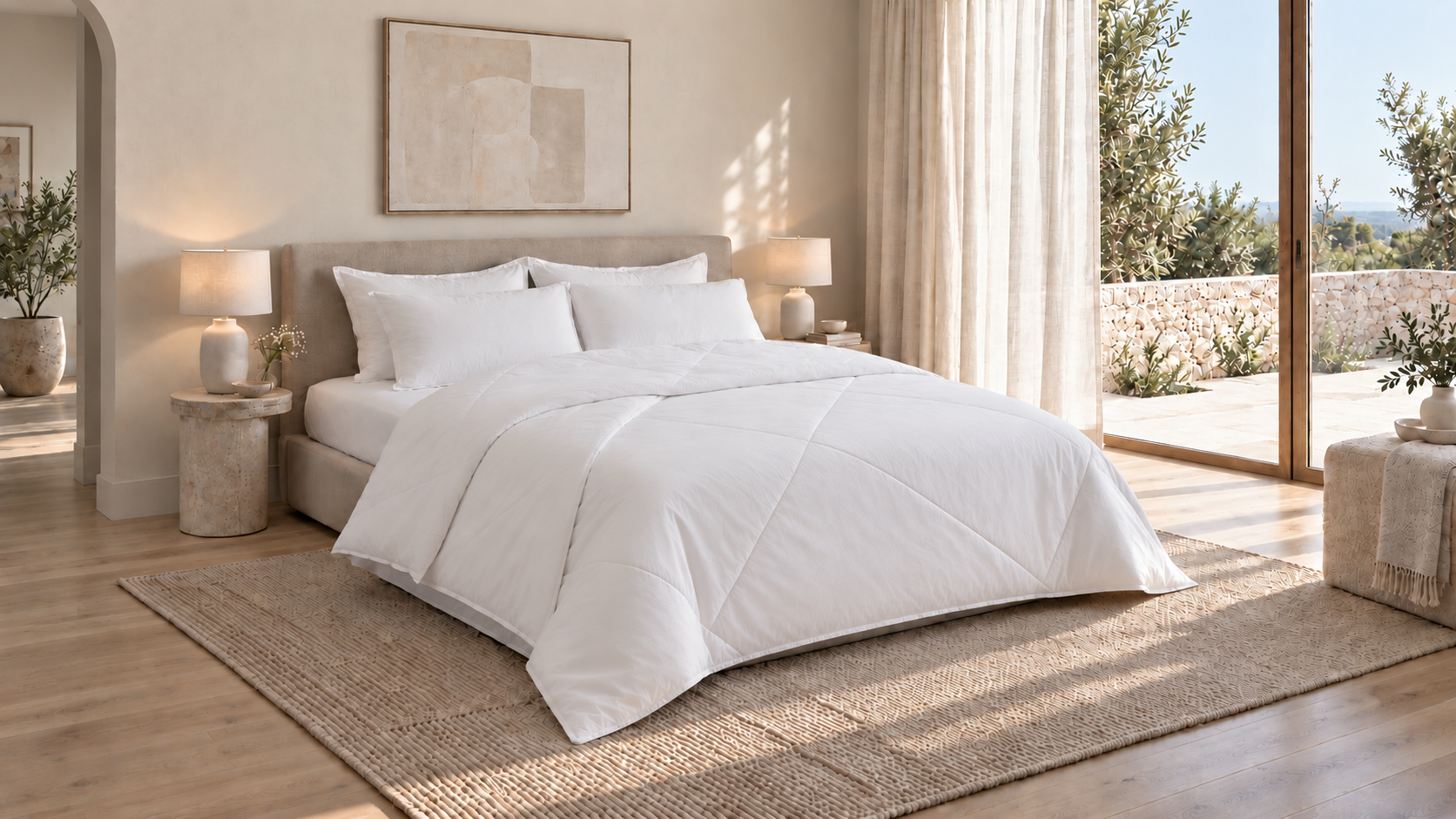
Warmth is another remarkable characteristic. Cashmere provides an exceptional level of insulation in relation to its weight. A cashmere duvet can help maintain a comfortable and consistent body temperature throughout the night, without the heavy feeling sometimes created by thicker materials. It offers a gentle, unobtrusive sense of comfort—exactly what you need for restful sleep without interruptions caused by thermal discomfort.

Its natural breathability allows air to circulate through the fibres, helping maintain balanced thermal comfort throughout the night, whatever the season.

In terms of durability, cashmere can retain its qualities for many years when cared for properly. It should not be washed at home. Instead, stains should be treated locally using oxygen-based cleaning solutions, while the duvet should be aired regularly in the sun and preferably used with a protective cover. Cashmere does not behave like just any other material: it requires a little extra care, but in return it offers a sleeping experience that is difficult to match with other fibres.

How to recognise authentic cashmere

With such a highly valued material, it is only natural that products of varying quality are available on the market. A few key characteristics can help you make a more informed choice: 

  • The feel – Authentic cashmere is soft, but it should not feel slippery or plastic-like. Its texture has a subtle density rather than an artificial smoothness. 
  • Fibre length and thickness – Longer, finer fibres generally indicate higher quality and better durability over time. 
  • How it behaves over time – A certain degree of initial pilling is normal, even in high-quality cashmere products. However, rapid or excessive pilling may indicate that the cashmere has been blended with coarser or lower-quality fibres. 
  • Transparency from the manufacturer – Clear information about origin, processing methods and certifications often reveals more about a product’s quality than the label alone. 

It is not simply about finding the “best” cashmere, but about understanding what genuine quality means for this material—and learning to recognise a quality that can be felt, not merely read on a label. 

Carefully selected cashmere in Valeria Home products

At Valeria Home, natural materials are not simply a selling point; they are the foundation of every product. Our cashmere duvets are designed to support deep, balanced sleep. Made in Romania, without toxic compounds or plastic, they are certified according to OEKO-TEX® STANDARD 100.

For the colder season, the Cashmere Winter Duvet provides the enveloping warmth you need during long winter nights. For the transitional seasons, the Cashmere Spring-Autumn Duvet offers the same natural comfort, adapted to milder temperatures.

These products are designed for those who understand the difference between simply sleeping and truly resting—a difference that cashmere, by its very nature, supports night after night.

Comments (0)

No comments at this moment