Wool Duvet: Natural Warmth and Restful Sleep

There is a clear difference between a duvet that simply covers you and one that adapts to your body throughout the night. Wool, particularly Merino wool, belongs to the latter category. It has a long history of use in high-quality textiles and is now being rediscovered for one simple reason: its ability to regulate body temperature with a level of precision that few other materials can match.

In this guide, we explore what makes a wool duvet different from other types of filling, why Merino wool is surprisingly well suited to warmer seasons as well as winter, and how to care for it correctly so that its natural benefits can be enjoyed for years to come.

Merino Wool: A Material with Remarkable Natural Properties

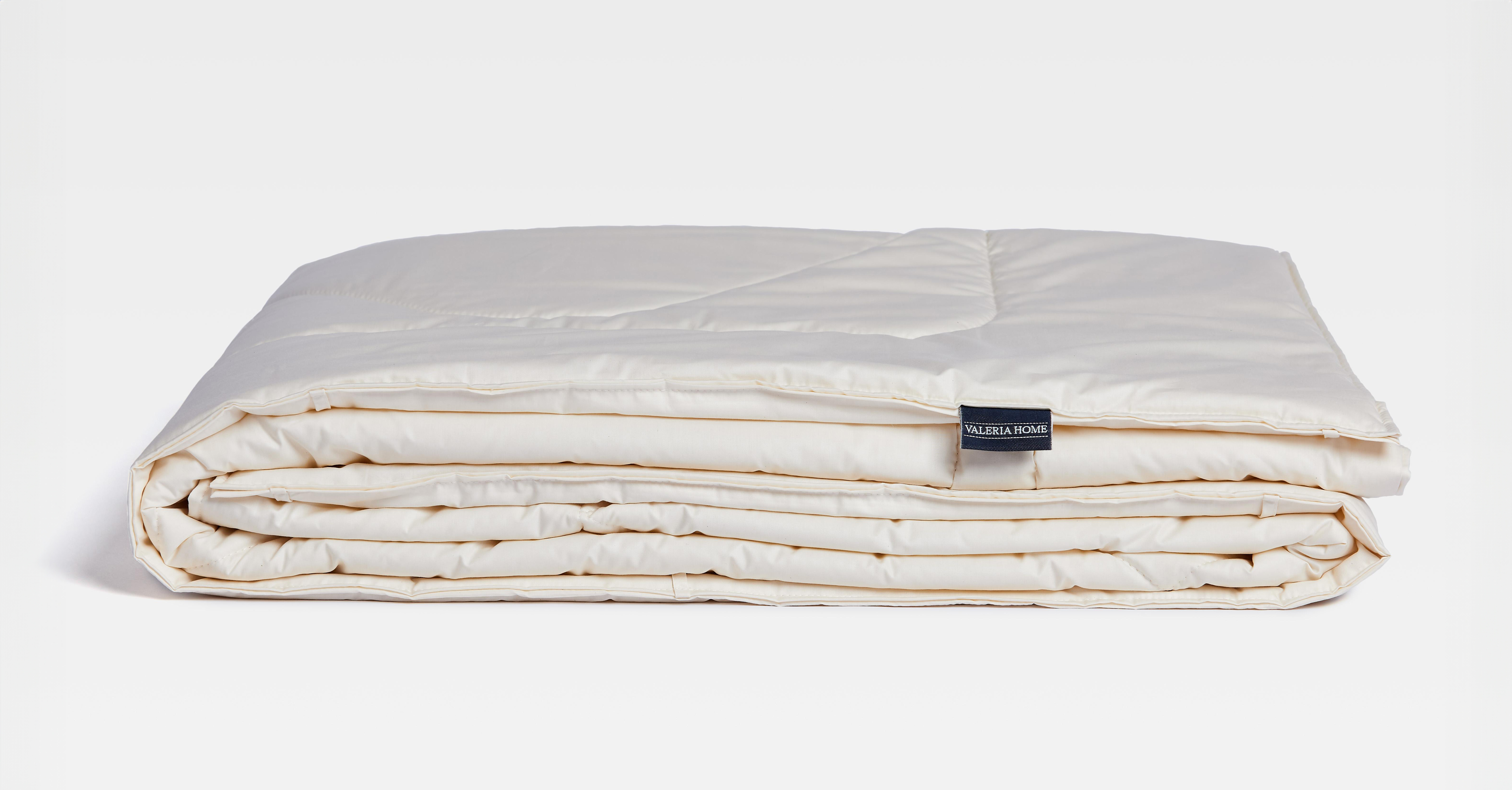
Every Valeria Home duvet is designed to support deep, restorative sleep, and Merino wool plays a distinctive role in achieving this, thanks to its natural structure.

Merino wool fibres can actively absorb and release moisture, helping to maintain a stable microclimate around the body throughout the night. Wool does not simply provide insulation; it responds continuously to the body’s needs. When the temperature rises, it helps release excess heat. When the temperature falls, the same fibres retain the warmth the body needs. This continuous balance is what makes a Merino wool duvet feel different, whatever the season.

Another advantage of Merino wool is its fine, elastic structure, which is far softer and more delicate than many people might expect. Its natural fibres have antibacterial properties that contribute to a cleaner, healthier sleep environment, while their soft yet resilient texture provides authentic comfort without unnecessary weight.

It is a carefully selected material, suitable both for those seeking consistent warmth and for those who need an adaptable, year-round solution that responds naturally to changes in temperature.

Why Wool Is Also a Suitable Choice for the Warmer Months

There is a common assumption that wool is exclusively a winter material. The reality is more nuanced. Merino wool fibres are naturally breathable, with a structure that allows air to circulate far more effectively than many people might imagine.

During warm nights, this natural breathability makes a noticeable difference. Rather than trapping heat and moisture, as synthetic fillings often do, Merino wool manages perspiration by absorbing water vapour and gradually releasing it. This helps prevent the uncomfortable, clammy sensation that can interrupt sleep.

The body remains dry and comfortable, while its temperature stays more stable, without the sudden fluctuations that can lead to unwanted awakenings.

This characteristic formed the basis for the development of the Merino Summer Duvet, created specifically for the warmer months. Its lighter Merino wool filling maintains a pleasantly cool and breathable feel without compromising the distinctive comfort of this natural material. It is a clear demonstration of how a carefully chosen natural fibre can respond to seasonal needs without compromise.

For those who prefer a single solution throughout the year, the Merino Four Seasons Duvet Set is based on the same principle of active temperature regulation. It adapts to both cooler and warmer nights, eliminating the need to replace your duvet whenever the seasons change.

For Those Who Prefer More Warmth 

For the colder months, or for those who naturally feel the cold more intensely, the Merino Winter Duvet features a higher filling weight while retaining wool’s natural temperature-regulating properties.

For balanced comfort during spring and autumn, the Merino Medium Duvet is a natural choice for most transitional seasons. It provides an intermediate level of warmth that feels neither too heavy nor too light.

How to Care for a Wool Duvet Correctly

The longevity of a Merino wool duvet largely depends on how it is cared for. Wool is naturally resilient, but it requires a different approach from cotton or synthetic materials.

A wool duvet should not be washed. Any marks should be spot-cleaned using a cloth and a small amount of active oxygen-based stain remover, without placing the duvet in a washing machine. For additional protection, the duvet should always be used with a duvet cover.

As part of its regular care, and whenever weather conditions allow, a wool duvet can be aired in natural sunlight. This helps release the moisture that naturally accumulates through perspiration during the night. Ultraviolet rays also have a natural sanitising effect, making exposure to sunlight an effective and gentle way to freshen the duvet.

Correct storage is equally important. Keeping the duvet in a dry, well-ventilated space, protected from moisture and prolonged compression, helps preserve its shape and temperature-regulating qualities over time.

Lanolin: A Natural Detail with a Distinctive Role 

One lesser-known characteristic of Merino wool is lanolin, a natural wax that coats each fibre and remains present in subtle amounts even after the wool has been cleaned and processed.

Lanolin contributes to the distinctive elasticity and softness of wool and has long been valued for its naturally soothing and protective qualities. It is another reason why Merino wool provides a genuine sense of comfort throughout the night—not only through its thermal properties, but also through its soft and pleasant feel.

A Material That Supports Truly Restorative Sleep 

Choosing a duvet is not simply a matter of temperature. It is also a decision that influences the overall quality of your sleep.

Carefully selected, non-toxic materials certified according to OEKO-TEX® STANDARD 100 contribute to a healthier sleep environment, without unnecessary chemical substances close to the skin throughout the night.

A Merino wool duvet made in Romania from 100% natural, plastic-free materials is more than a luxury product. It is an investment in a balanced and restorative sleep experience—the kind of quality you can feel, night after night, in the sense of wellbeing with which you wake each morning.

Frequently Asked Questions About Wool Duvets 

Can a Merino wool duvet be washed in a washing machine?

Machine washing is not recommended. Merino wool retains its natural properties best when it is aired regularly rather than washed frequently. Any marks should be spot-cleaned according to the product’s care instructions.

Why is a wool duvet suitable for summer as well as winter?

Merino wool fibres are naturally breathable and have a structure that allows air to circulate effectively. During warm nights, wool absorbs the moisture released by the body and gradually releases it into the surrounding air.

This helps maintain a dry, comfortable sleeping environment and a more stable temperature, without the sudden fluctuations often associated with synthetic materials.

How long can a Merino wool duvet be used?

With correct care, regular airing and storage in a dry, well-ventilated space, a Merino wool duvet can retain its temperature-regulating properties for many years.

It is generally more durable than synthetic fillings, which can become compressed and lose their effectiveness more quickly over time.

Is a Merino wool duvet suitable for people with sensitive skin?

Yes. As a natural material used in products certified according to OEKO-TEX® STANDARD 100 and free from harmful chemical substances, Merino wool is a suitable choice for those seeking a comfortable, non-toxic sleep environment throughout the night.

Comments (0)

No comments at this moment